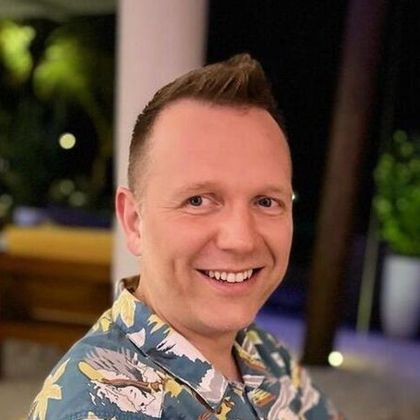
From liveaboard buddies to a much bigger ambition for our oceans. Dan shares why Scuba Network is becoming DSCNT, and why he's so excited about what's coming next.
Several years ago, at the end of a liveaboard trip, a group of us were trying to work out how to stay in touch.
We'd spent a week diving together, swapping stories about previous diving adventures and getting to know each other. You get to know people pretty well, pretty quickly in the close quarters of Blackbeard's Seastar! But at the end of the week, when it came to exchanging details, one person was on Instagram, another used Facebook, and a couple were on WhatsApp. We struggled to find a common platform to keep those conversations and that camaraderie going.
So we exchanged email addresses.
We did keep in touch, in a slightly old-fashioned pen-pal sort of way. But it was clunky and didn’t come close to capturing the excitement of diving together. An hour of pointing and hand signals, then we’d surface, regulators out: “Did you see the size of that…?” “Did anyone see the…?” Back on the boat, the inspiring stories would continue. Over email, it just wasn’t the same, and over time, those conversations slowly faded.
That experience was one of the reasons I started Scuba Network. And it's a good place to begin explaining why we're now becoming DSCNT, pronounced “descent” (not discount!).
Photo: Dan Voyce
Staying connected between dives
I'm very much a warm-water holiday diver. Living in London, a long way from the diving I tend to travel for, I often felt disconnected from that world once I was home.
I wanted somewhere to keep those connections alive. Somewhere to share the dives we'd enjoyed, find inspiration for the next trip and stay part of a community between holidays.
There was another frustration too: planning the diving itself. Finding reliable information about a place at a specific time of year is surprisingly difficult. What was the water temperature like? How good was the visibility? What condition was the reef in, and what marine life were people actually seeing?
Then there were the questions about safety and suitability: currents, challenging entries and whether a site was a good fit for our experience. I wanted recent observations to help us plan and know what to ask the local dive operators. Those details can make or break a dive trip.
Yet so much useful information was already sitting in our logbooks and photos. We recorded it for ourselves, then rarely did much else with it. Imagine how useful those experiences could be to the next person planning to go there!
I started building Scuba Network to help connect those people and those observations.
Then I started seeing the bigger picture
As I worked on those problems, I began learning more about citizen science: people contributing observations that can help scientific work. It dawned on me that the information I wanted for planning a dive might also be useful to someone studying that same stretch of ocean.
I was already incredibly motivated by the opportunity in front of me. I could see the huge potential to help divers connect and get more out of their diving. But realising that those same connections and observations could also support science, conservation and restoration gave me a much bigger reason to make it work.
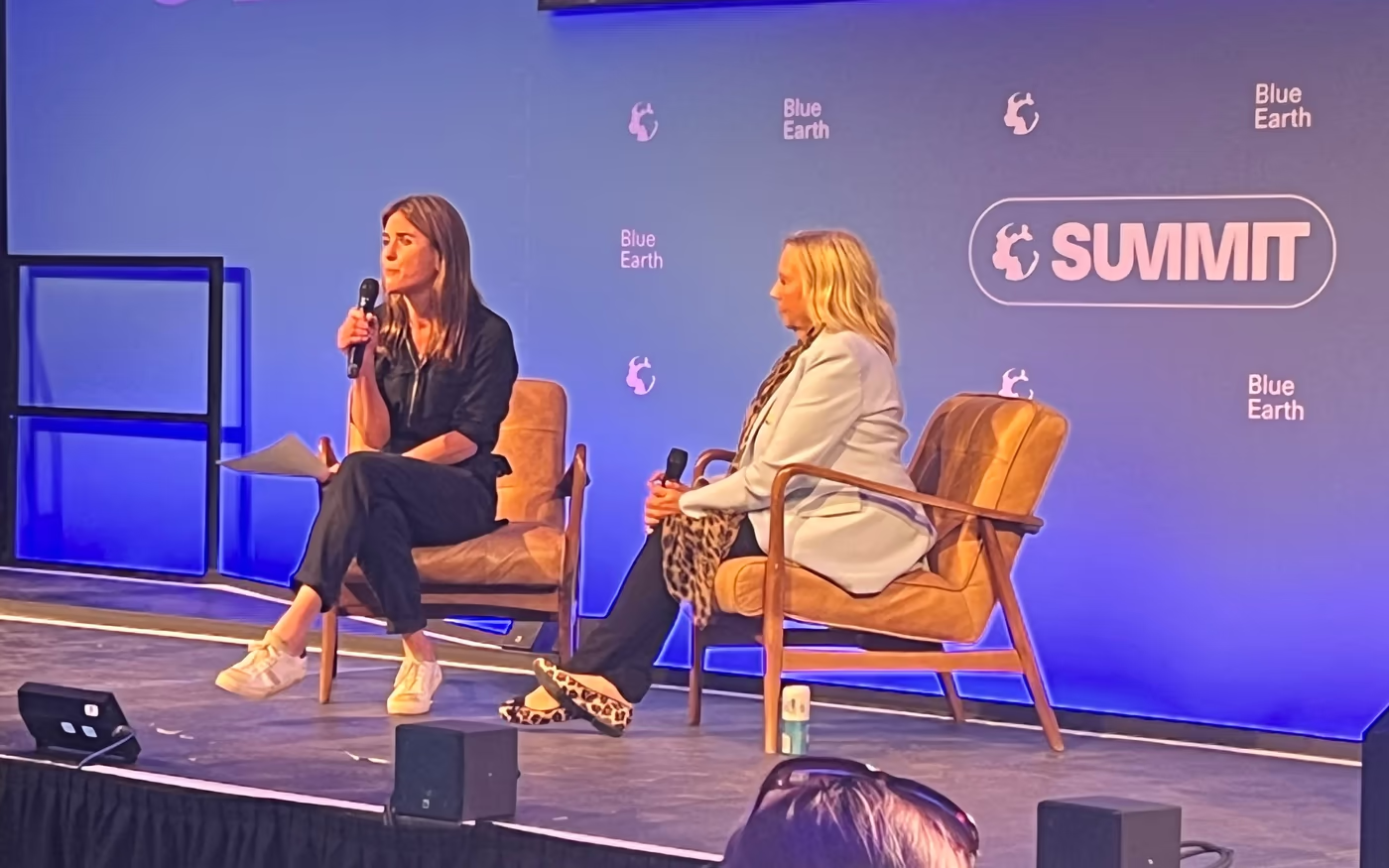
I remember watching Deborah Meaden speak at the Blue Earth Summit in London about sustainability. Her phrase “rocket fuel” stayed with me. What resonated was the idea of combining the ambition to build something successful and profitable with a purpose that does something positive for the planet.
Photo: Dan Voyce
That's exactly what discovering the science and conservation potential did for me. I already believed in the opportunity. Now I could see how its success could also help the ocean and the people working to protect it. That gave me a whole new level of determination.
Building something useful for divers was already exciting. Seeing how that
same work could contribute to science and conservation was my rocket fuel.
A name with a wider welcome
Scuba diving is where this began, and it remains central to DSCNT.
As the idea grew, I wanted freedivers, snorkelers and other ocean lovers to feel just as welcome. Having “Scuba” in the name could make someone wonder whether it was really for them.
Even with all the ways we can connect online, these communities often exist separately. I wanted to help bring them together, including scientists and conservation organisations, and the name needed to reflect that.
I'll be honest, coming up with the name took months! I kept testing different variations with people, trying to find something unique that felt welcoming and explained what we were about. And, of course, it needed a web address I could actually buy.
Eventually, I landed on “descent” without the vowels: DSCNT. It's a word familiar to divers. And, by a happy accident, those letters also gave us:
DSCNT: The Dive, Science & Conservation NeTwork. Pronounced “descent”.
I don't think that could capture what we're all about any better!
Where I'd like this to lead
If you've been using Scuba Network to log your dives, keep your memories or find new places to explore, those things remain at the heart of DSCNT. They are the reasons I started building it.
What I'd love to see over the next few years is those observations being put to use: helping divers plan better trips and discover somewhere new, helping scientists in their research, and helping conservation and restoration organisations in their work.
Then I'd like us, as divers, to see what comes from our contributions. To see our observations being used, understand what people learn from them and bring that knowledge into our own diving. That's the part I'm most excited to see happen.
From diver to science, to conservation, and back to diver. That's the
connection we're working towards.
There's plenty still to build, and I'll share more about the ocean-science side of that work in the next post. For now, I wanted you to hear the story behind the name from me.
I'm so excited about where this is going. Thanks for being part of it.